
Grow Industrial Hemp in Washington State — IHPA Farmer Partnerships
The Opportunity
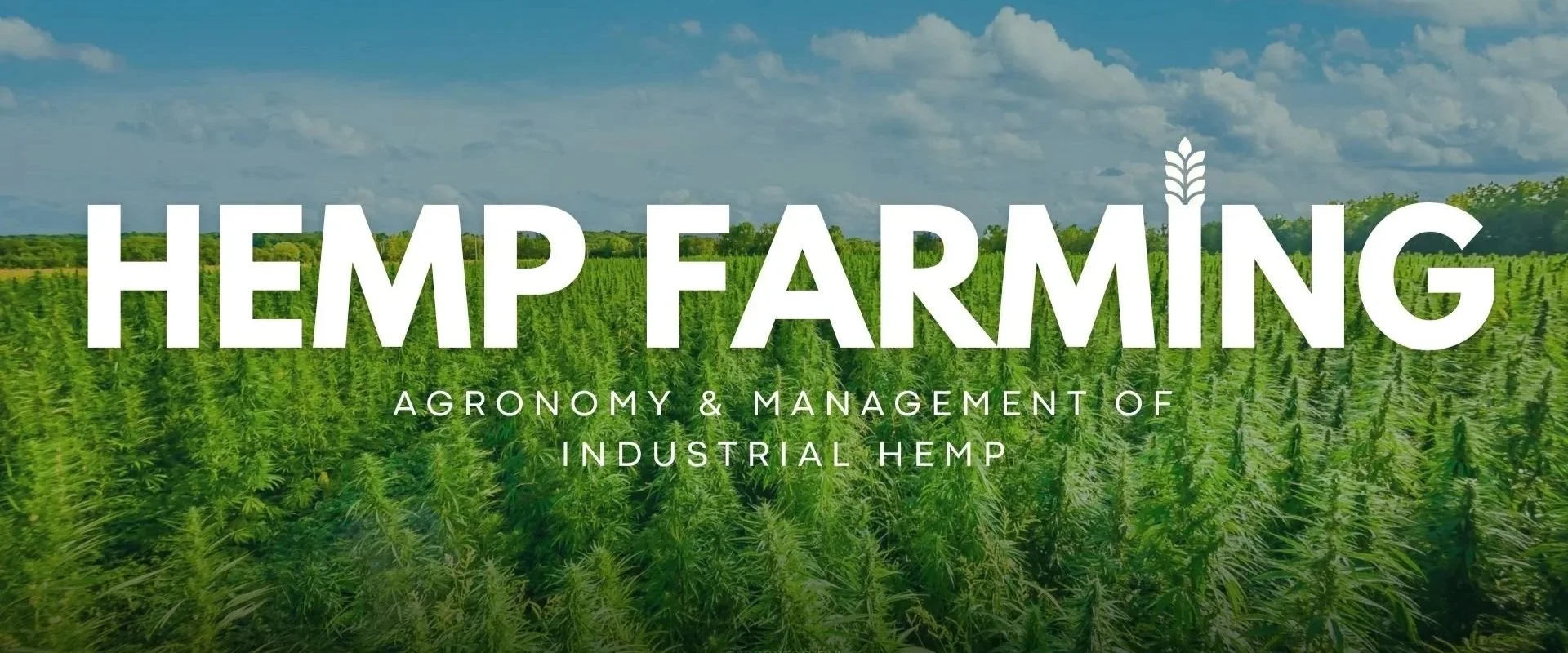
Industrial hemp provides four revenue streams from a single crop — fiber, hurd, seed/grain, and biochar carbon credits — with applications in over 50,000 products. It sequesters 40 tons of carbon per acre, breaks pest cycles, and suppresses weeds naturally. But without regional processing infrastructure, farmers have no market. IHPA closes that gap with Washington's first dedicated processing facility, guaranteed offtake contracts, certified seed, and WSU-backed agronomy support.
🌱 Soil Structure & Health
Three root types (tap, fibrous, adventitious) break compacted soil to 36", improve infiltration, and pull nutrients to surface for subsequent crops.
🛡️ Pest & Disease Disruption
Hemp breaks fusarium and nematode cycles common in wheat/potato systems. Key pests limited to cutworms, flea beetles, corn borer.
💧 Water Efficiency
Root zone 18–36". Peak demand only 0.20–0.25 in/day. Central WA needs 12–18" seasonal; Eastern WA supplemental 4–6"; Western WA typically sufficient rainfall.
🌿 Natural Weed Suppression
Canopy closure by 20–25 DAS shades out weeds, reducing synthetic herbicide dependence. Avoids residual carryover issues.
🌍 Carbon Sequestration
40 tons of carbon per acre (soil-validated, Kuo Testing Labs), 70–120 day cycle. One of the most efficient carbon-capturing crops available.
💰 4 Revenue Streams Per Acre
Fiber/grain contract pricing + biochar carbon credit revenue + long-term offtake + seed stock agreements. Reduced risk, guaranteed markets, carbon-positive farming.
| Type | Preceding Crop | Typical Yield |
|---|---|---|
| Fiber | Small grains, grass/N fixer | 4–6 tons dry stalk/ac |
| Dual Purpose | Cereal, potato | 800–1,200 lbs seed + 1.5–2 t stalk |
| Grain | Legume, oilseed | 1,200–2,000 lb seed/ac |
| Type | Seed Rate | Plants/Ac | N-P-K (lb/ac) |
|---|---|---|---|
| Fiber | 50–75 lbs | 1M | 80–150, 40–80, 80–160 |
| Dual | 25–30 lbs | 250K | 100, 80–60 |
| Grain | 20–25 lbs | 150K | 120, 60–40 |
| Plot | Year 1 | Year 2 | Year 3 | Year 4 | Year 5 |
|---|---|---|---|---|---|
| Plot One | Hemp | Corn | Wheat | Clover | Grass |
| Plot Two | Hemp | Potato / Sugar Beet | Wheat | Clover | Grass |
| Plot Three | Corn | Beans / Peas | Hemp | Oats / Barley | Clover |
The Infrastructure Gap
Over 95% of U.S. hemp is underutilized and no regional processing exists. IHPA has engaged ~500 growers representing 100,000–200,000 acres in Washington State.
We're building the first dedicated facility at the Kaiser Mead Industrial Area (Spokane County NPL Superfund site) to produce fiber, hurd, biochar, hempseed oil, protein meal, and graphene precursors.
IHPA provides certified seed, WSU-backed agronomy guidance, and guaranteed buy-back contracts for farmers at current market rates.
Proposed NRCS Partnership
Public-private partnership where NRCS Regenerative Pilot funds support farmer adoption, while IHPA provides processing capacity and Seed2Sink delivers digital MRV carbon verification.
Funds farmer transition to hemp rotations
Certified seed, agronomy, field trials
Processing, offtake, carbon MRV
Structural & Construction
Hempcrete aggregate
Binder free insulation
Fiber mats & panels
NatureFlux biochar additives
Agricultural & Environmental
NatureFlux Biochar line
(Pro, Duo, Mono+, Aqua, Grow)
Soil remediation
Carbon sequestration credits
Nutritional & Wellness
Hempseed oil & flour
Food grade protein powder
Animal feed & bedding
Green microfiber extracts
Industrial & Advanced
Hemp-derived graphene
Carbon fiber precursors
Hemp-glass composites
(AuraLux™ materials)
in Washington
letter of support
certified seed partner
Superfund location